


Four Seasons in Istanbul Turkey


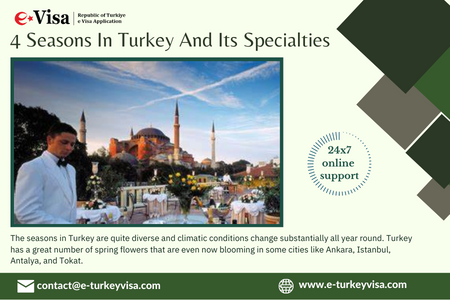
The seasons in Turkey are quite diverse and climatic conditions change substantially all year round. Turkey has a great number of spring flowers that are even now blooming in some cities like Ankara, Istanbul, Antalya, and Tokat. The landscape changes from the mountainous areas to the sloping Sarikamis places throughout the country. There may be different types of plants and trees in different places.
Discuss the weather in Turkey during four seasons
The weather in Turkey can be divided into four seasons: summer, winter, and spring. The temperature ranges from 15 to 25 degrees Celsius in the spring (59 and 77 degrees Fahrenheit). Summer temperatures range from 25 to 35 degrees Celsius (77 and 95 degrees Fahrenheit). In the winter, Anatolia experiences temperatures between 10 and 15 degrees Celsius (50-59 degrees Fahrenheit) while Thrace experiences temperatures between 8 and 10 degrees Celsius (46-50 degrees Fahrenheit).
There are two rainy seasons in addition to the four others: the first one typically lasts from May to June and the second from October to November. Depending on the area, the yearly rainfall ranges between 100 mm and 200 mm.
The most important climatic events in Turkey are rainfall and snowfall cycles. Rainfall occurs mainly in the spring months of March, April, and May when there are rains up until October or November. Snowfalls occur mainly during the fall months from September to November with heavy snowfalls during December or January.
Discuss the animal life in Turkey during the four seasons
The animal life in Turkey is rich and diverse. The nation is home to a great number of wild creatures that live in various settings. Several species may be spotted during the spring, summer, and fall seasons.
During the four seasons in Turkey, you can see animal life in Turkey. During the winter season, we can see snow leopards and ibexes, while during the summertime, we can see deer and wild boar. During spring and autumn, we can see foxes, hares, and chamois as well. Several creatures only found in Turkey can be found nowhere else.
The animal life of Turkey varies with the seasons. When it's winter in Turkey, you will find snow leopards lurking around the forests and highlands of Anatolia. They are very shy animals that live at high altitudes where there is little human interference. The snow leopard is one of the most endangered species on earth due to loss of habitat due to deforestation and poaching for their fur and bones used in traditional medicine or sold on the black market as aphrodisiacs by Chinese traders.
The spring season is the most pleasant time of year in Turkey and it lasts until early June. The days are nice and breezy, yet the evenings are chilly enough to sleep inside comfortably. The flowers are in bloom, there are no bugs or mosquitoes, and the weather is very pleasant. The heat increases gradually as the summer progresses through mid-July until late August when it becomes unbearable once again.
The autumn months are the best time of year to visit Turkey because they offer cooler temperatures than other seasons do. Temperatures drop below freezing at night and rise above 60 degrees Fahrenheit during the day; this makes it ideal for hiking in colder areas like Cappadocia or visiting other cities near Lake Van.
The summer season is also an important one because it helps them find food in more places than in other seasons. This means that you will encounter more wildlife during this period than during other times of the year.
Wild boars are the most common wild animals during the summer season in Turkey. They may be found in grasslands and woodlands, particularly those close to lakes and rivers. Wild boars are mostly nocturnal animals and they live in groups of up to 10 individuals. Their diet consists of leaves, berries, fruits, and mushrooms.
Raccoons are small mammals that live in trees or on the ground. Raccoons are omnivores; they eat both plants and animals, but their main source of food is fruits and berries.
Foxes live all around Turkey during the summer months. Foxes are carnivores that feed on rabbits, hares, and other small animals. Foxes live in dens underground or under rocks during cold winter months; when spring comes they move out into open areas where they can find food more easily.
READ MORE:TURKEY ONLINE TOURISM VISA
Discuss the different seasons in Turkey and the unique food that is available during each one
Turkey is a land of contrasts. It's a country that has both the sunniest and snowiest climates in Europe, with its summer temperatures regularly reaching 40 degrees Celsius and its winter temperatures rarely falling below freezing.
There are four different seasons in Turkey: spring, summer, autumn, and winter. Every season has its own set of gastronomic specialties.
Spring:
Spring in Turkey is the most popular time for tourists because it is the only time when it is warm enough to enjoy outdoor activities. The weather during spring is mild, with temperatures ranging from 20 to 25 degrees Celsius (68 to 77 degrees Fahrenheit).
This makes it the best time for hiking and other outdoor activities. If you visit during this season, make sure to bring along plenty of warm clothing and items that can help you stay warm, such as scarves and gloves.
The spring season begins on the first of March and concludes on the final day of October. The most prominent foods during this time are lemons and tomatoes.
Summer:
Summer in Turkey can have very hot temperatures, but it also offers great opportunities for outdoor activities like swimming and hiking. If you come during summer, pack for an active vacation that includes lots of water sports and fun in the sun.
Summer begins on the first of June and concludes on the final day of September. The most prominent foods during this time are watermelons, melons, and cucumbers
Autumn:
Autumn usually starts around September or October and lasts until November or December. During autumn, there is less rain than in other seasons so your chances of getting caught in a downpour are lower than usual.
The fall season begins on the first of November and concludes on the final day of February. The most prominent foods during this time include apples, pears, and grapes.
Winter:
The first day of December marks the beginning of the winter season, which lasts until the last day of March (or April). During this time there are no fruits or vegetables available; instead only fish can be found on the tables in restaurants.
Discuss the importance of Turkish cuisine and how it has shaped the nation
The cuisine of Turkey has a long history. It is believed that Turks were the first to create and eat rice-based dishes. Rice was introduced to the country by the Arabians in the 8th century and was quickly adopted by the native people.
Turkish cuisine is a rich and diverse meal that is considered by many to be the most popular in the world. Although the nation is home to numerous diverse cultures, Turkish cuisine has evolved into the foundation for many of them.
Turkish food is known for its variety, flavor, and balance. It's not just about salty or sweet – Turkish food uses spices like nutmeg, cinnamon, and cloves to complement the meat and vegetables on your plate. You'll find that every dish has a specific purpose: some are hearty enough to be enjoyed as main courses; others are light enough for a snack on the go.
Turkish cuisine has evolved with influences from other cultures such as Greeks, Armenians, and Persians. The variety of Turkish cuisine is its most significant characteristic. There are many different kinds of food in Turkey, including rice-based dishes, vegetables, meat, and fish.
In Turkey today many restaurants serve traditional Turkish food. One can find restaurants serving different kinds of kebabs on street corners or even in small shops around town. Many people also enjoy eating out at cafes or cafeterias where they can enjoy fresh bread with their meals.
READ MORE: WHAT DO YOU REQUIRE TO APPLY FOR TURKEY WORK VISA
Conclusion
Turkey has 4 distinct seasons. This seasonality should be well understood by everyone who plans to spend the holidays in Turkey. You're expected to see extended spells of sunny, warm weather with temperatures exceeding 20 degrees around Christmas. There is a propensity for nighttime frost or fog throughout April and May. It is fairly popular during this season because it coincides with the summer break.
The most popular season in Turkey is spring. Even the natural seasons of fall and winter are very interesting, especially when you've known them as a Turkish native. The most famous places of Turkey, including Antalya, Cappadocia, Fethiye, and Istanbul, are still popular with tourists.
You will be able to enjoy the best experience when the spring season ends and the summer season starts. Turkey is a terrific spot to look if you're seeking for a location with a decent amount of exciting things to do all year long.
In Turkey, there are four distinct seasons, each with unique foods. We hoped that this blog was able to give you useful information on Turkey's four seasons and what to anticipate while there if you are thinking about visiting. Please visit our website to learn more about Turkey's four distinct seasons. We will be pleased to help you.
Was this article helpful?
Thanks — that helps us write better guides.


-
 Tourist Visa
turkey-portal-move-2026-09-23
0 comments
5 views
Tourist Visa
turkey-portal-move-2026-09-23
0 comments
5 views
Best Hiking Trails in Turkey
Do you want to visit the amazing trekking trails of Turkey? Imagine the soul-pleasing scenery you will be… -
 Tourist Visa
turkey-portal-move-2026-09-23
0 comments
5 views
Tourist Visa
turkey-portal-move-2026-09-23
0 comments
5 views
Most Picturesque Locations in Turkey
Are you intrigued by the wonderful and breathtaking scenic sites of Turkey? Turkey has a lot of adventures,… -
 Tourist Visa
turkey-portal-move-2026-09-23
0 comments
5 views
Tourist Visa
turkey-portal-move-2026-09-23
0 comments
5 views
Turkey Visa for Tanzania Nationals
In this article, you can find all the relevant information related to turkey visas for Tanzania nationals.…


Comments
0No comments yet. Be the first to ask a question.